
How to Select a Trustworthy Gas Generator Set Manufacturer?
Choosing a gas generator set is not simply a matter of comparing a nameplate rating and a quoted price. For a project buyer, the more useful question is whether the manufacturer can define the duty, support the proposed configuration, document what was tested, and stay accountable after commissioning. A gas generator set manufacturer that is credible for one application may still be a poor fit for another if fuel quality, load behavior, site conditions, or service expectations are left vague.
From a procurement-review perspective, start with the project boundary. Is the set intended for continuous generation, peak shaving, standby duty, or a hybrid system alongside solar or storage? Then ask what the supplier will verify, what it will supply, and what remains the responsibility of the integrator or owner. That order makes manufacturer comparisons much more meaningful.
Start With the Operating Requirement, Not the Brochure
A trustworthy manufacturer will ask questions before recommending a gas generator set. At minimum, it should seek a load profile, expected running hours, ambient conditions, fuel-source details, electrical interface requirements, emissions constraints, and any local approval requirements. A supplier that moves straight to a model number without those inputs may be pricing an assumption rather than a workable system.
Load information deserves particular attention. Ask for the expected base load, peak load, motor-starting events, load steps, and anticipated future expansion. A set sized only for the highest instantaneous number can operate inefficiently at low loads; one selected around an average without considering starts and transients can produce a different problem. The manufacturer should explain its sizing logic and any operating limits in writing.
- Define the duty: prime, continuous, standby, or project-specific operating profile.
- Provide fuel composition, pressure range, and expected variability where applicable.
- State voltage, frequency, earthing arrangement, and control or synchronization needs.
- List environmental limits, including altitude, temperature, ventilation, and noise constraints.
Evaluate Engineering Capability Through the Questions Asked
Good technical communication is evidence of process, not a substitute for it. A capable gas generator set manufacturer should be able to distinguish between the engine package, alternator, control system, enclosure, fuel train, switchgear, exhaust arrangement, and installation scope. It should also identify the interfaces that must be confirmed with the site designer or EPC contractor.
For example, gas quality and pressure are not minor details. Methane content, contaminants, moisture, pressure stability, and upstream conditioning can affect whether a proposed gas generator set is appropriate and what auxiliary equipment is needed. The right answer is not an unconditional promise. It is a documented list of assumptions, required tests, and actions if site fuel deviates from those assumptions.
Similarly, if the project involves parallel operation, renewable generation, or battery storage, ask who owns protection coordination, control logic, communication protocols, and commissioning responsibility. System integration depends on clear interfaces. A reliable supplier will name those boundaries rather than letting them disappear between quotations.
Request Verifiable Manufacturing and Test Evidence
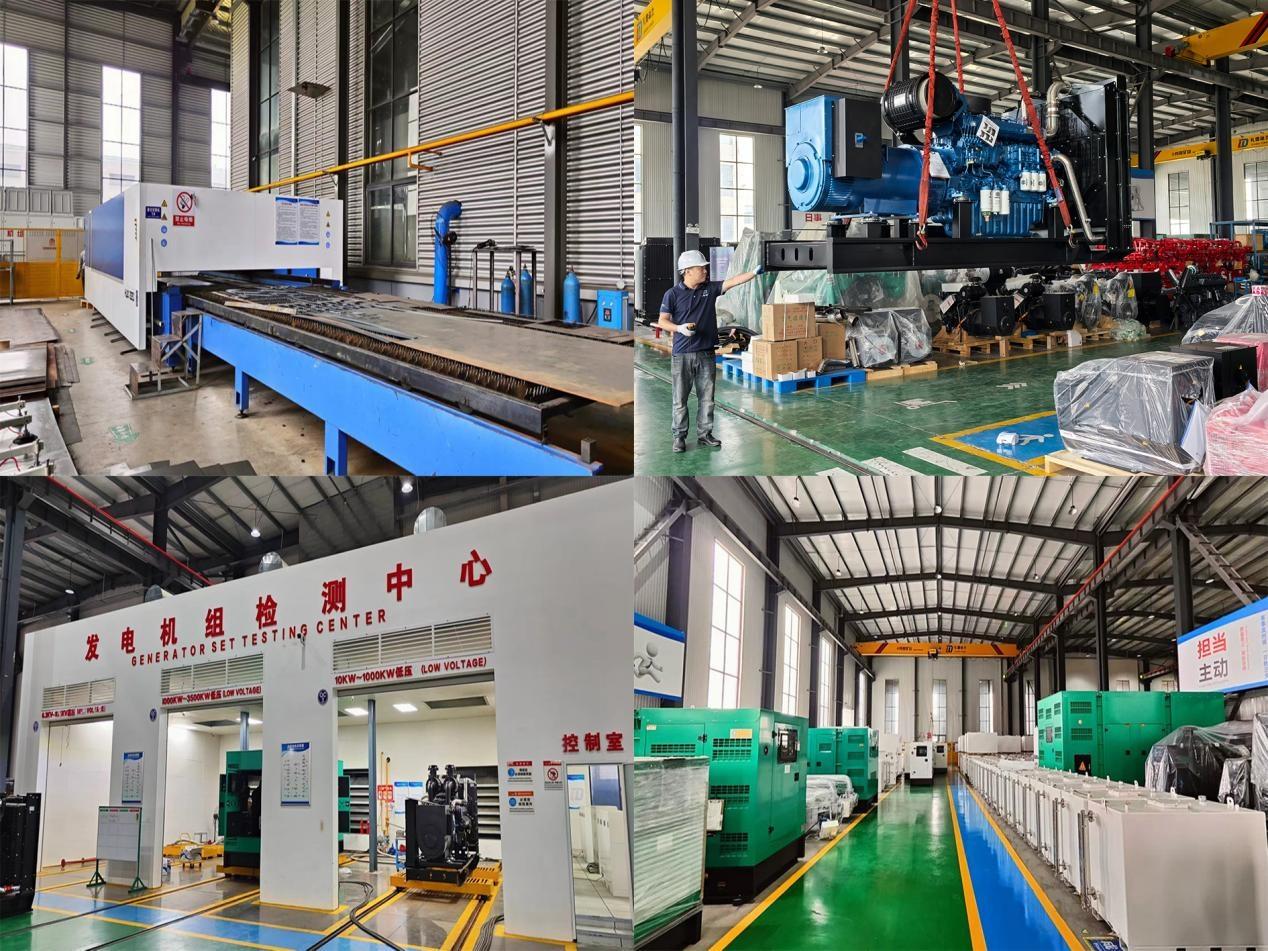
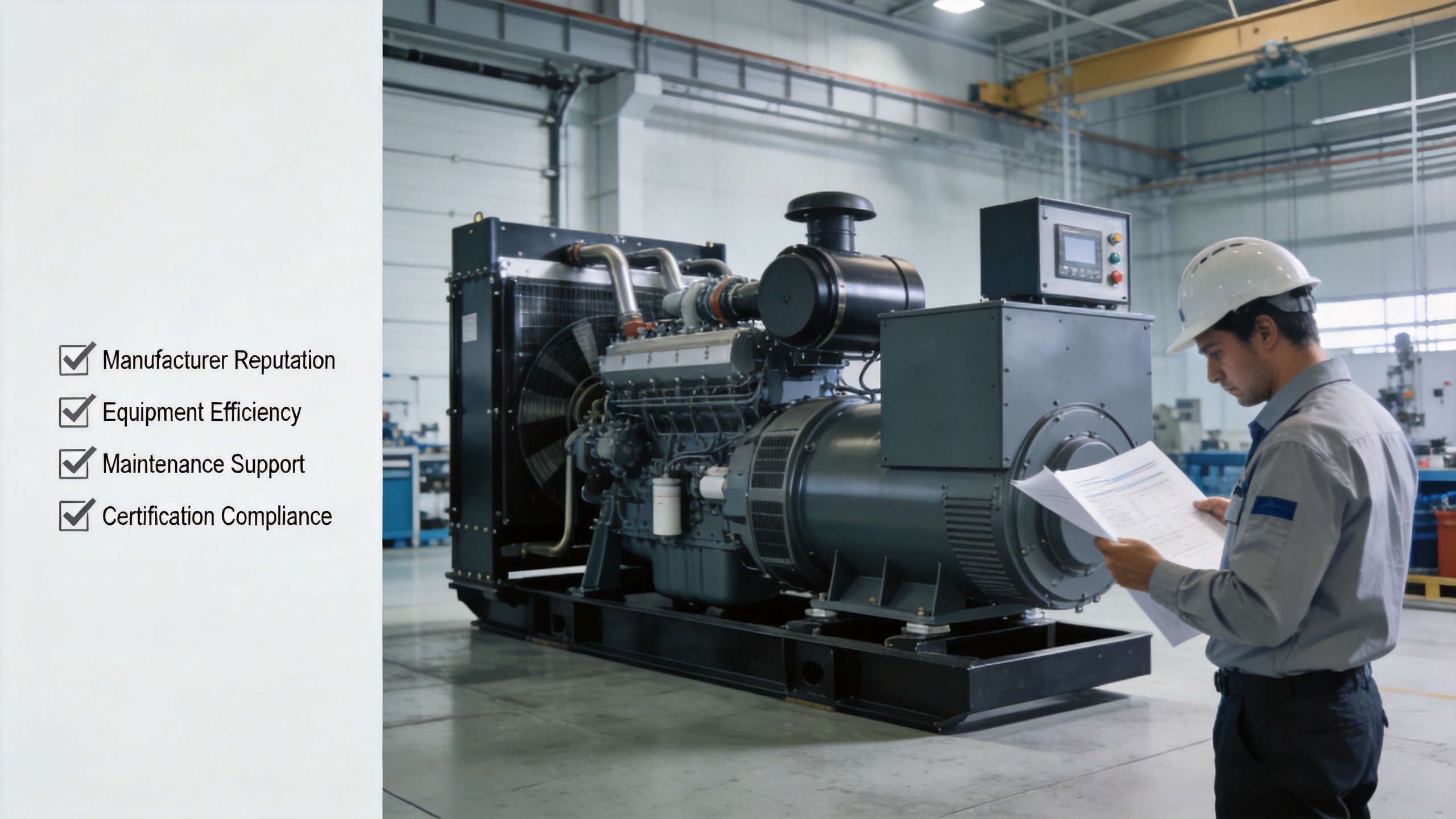
Trust should be supported by documents that a buyer can review. Ask the manufacturer for a sample quality plan, inspection and test plan, factory acceptance test outline, and commissioning checklist appropriate to the project. ISO 8528-5 is commonly used as a framework for engine-driven generating-set test methods; the practical question is which edition, performance class, and test scope apply to your proposal. Do not accept a general statement of compliance without supporting records.
For emergency-power projects, requirements can be more specific. NFPA 110 may be relevant in applicable jurisdictions or specifications, but it is not a universal shorthand for every installation. Ask the supplier to identify the project requirement, the functions it will test and document, and which acceptance activities occur at the factory versus on site.
| Evidence to request | Why it matters | Useful follow-up question |
|---|---|---|
| Data sheet and scope matrix | Shows what is included and excluded | Which auxiliaries, cables, controls, and site works are outside supply? |
| Factory test procedure | Clarifies how the proposed set will be checked | Which load, protection, and alarm functions are witnessed or recorded? |
| Component list | Supports configuration traceability | Which engine, alternator, controller, and fuel-train components are proposed? |
| Commissioning plan | Connects factory delivery to actual site operation | Who attends site testing and who signs off each interface? |
Compare Scope, Delivery Control, and Service Readiness
Price comparisons become misleading when quotations cover different things. Create one scope matrix and require each manufacturer to respond to it. Include the base gas generator set, control panel, enclosure, cooling method, gas treatment or filtration assumptions, exhaust system, synchronization equipment, drawings, spares, start-up support, operator training, warranty terms, and response process for service requests.
Then look at delivery control. Ask how the supplier manages engineering changes, serial-number traceability, sub-supplier inspection, packing, manuals, and non-conformance records. These questions may feel operational, yet they reveal whether a manufacturer can control a project after the sales stage.
Maintenance planning is equally important. A dependable gas generator set manufacturer should describe recommended maintenance intervals as a project-specific plan, identify consumables and critical spares, and state where technical support will come from. Avoid treating a spare-parts list as proof of support; confirm lead times, documentation language, remote support channels, and the escalation path for a shutdown.
Use References Carefully and Verify What Is Comparable
References can help, but only when the application is comparable. Ask for authorized examples that match your fuel type, duty cycle, output range, climate, and integration complexity. If confidentiality prevents detailed disclosure, request a structured reference summary that explains the operating context and the supplier’s role without exposing customer information.
During the reference check, focus on facts that affect delivery: Were the original assumptions accurate? Were changes handled transparently? Did commissioning involve unresolved interfaces? How were parts, technical questions, and warranty items managed? A single impressive installation does not prove every capability, but a consistent and verifiable process is a strong signal.
Watch for Warning Signs Before You Award the Order
- The quotation gives a power rating but no duty definition, derating basis, or fuel assumptions.
- The supplier will not provide a clear inclusion and exclusion list.
- Test claims are broad, while the procedure, records, and witness options are unavailable.
- Answers to controls, protection, gas quality, or site interfaces are deferred without an owner.
- Warranty language is detailed, but service response, spare-parts availability, and commissioning support are vague.
- References cannot be tied to a comparable application or the supplier’s actual scope.
A Practical Supplier-Selection Checklist
- Write a one-page operating brief before requesting quotations.
- Send every bidder the same technical and commercial scope matrix.
- Require documented assumptions for fuel, load, site conditions, and interfaces.
- Review proposed test and acceptance evidence before placing the order.
- Compare lifecycle support: commissioning, training, spares, maintenance, and escalation.
- Confirm responsibility for every interface before the purchase order is released.
Make the Final Decision on Evidence, Not Assurances
A sound choice is rarely the supplier with the longest feature list. It is the manufacturer whose engineering assumptions match your operating conditions, whose supply scope is transparent, and whose testing and service commitments can be verified. For buyers considering a gas generator set, the clearest path is to turn verbal assurances into a comparison file: requirements, assumptions, drawings, test records, responsibilities, and support commitments.
Jiangsu Keya New Energy works across cleaner generation directions and can discuss requirements spanning design, supply, installation, and after-sales coordination. For any project, the right next step is a structured technical review of the load, fuel, interfaces, and service boundary before a configuration is finalized.
 Hot News