
Why Choose a Dual Fuel Gas Generator for Industrial Backup Power?
When an industrial site loses utility power, the important question is not simply whether a gas generator can start. The question is whether the complete backup system can support the required loads, respond to a changing fuel situation, and remain manageable during a long disruption. A dual fuel gas generator can be a practical option where the facility wants the convenience of a gaseous fuel supply together with a planned secondary fuel path. It is not automatically the preferred choice for every plant, but it can give operations teams more options than a single-fuel design.
For facilities in utilities, transport, water, communications, municipal infrastructure, and construction, backup-power planning is a system decision. Generator rating, transfer equipment, fuel quality, gas pressure, storage capacity, ventilation, controls, maintenance access, and local code requirements all affect the outcome. This article explains where a dual-fuel approach fits and what to check before specifying it.
What a Dual Fuel Gas Generator Adds to a Backup Strategy
A conventional gas generator is often attractive when a site has a dependable natural-gas or other approved gaseous-fuel connection. The fuel may be delivered continuously rather than stored in a finite on-site tank, which can simplify routine refueling planning. That advantage should not be treated as a guarantee: gas networks can face pressure changes, curtailment policies, maintenance events, or disruption during the same incident that causes a power outage.
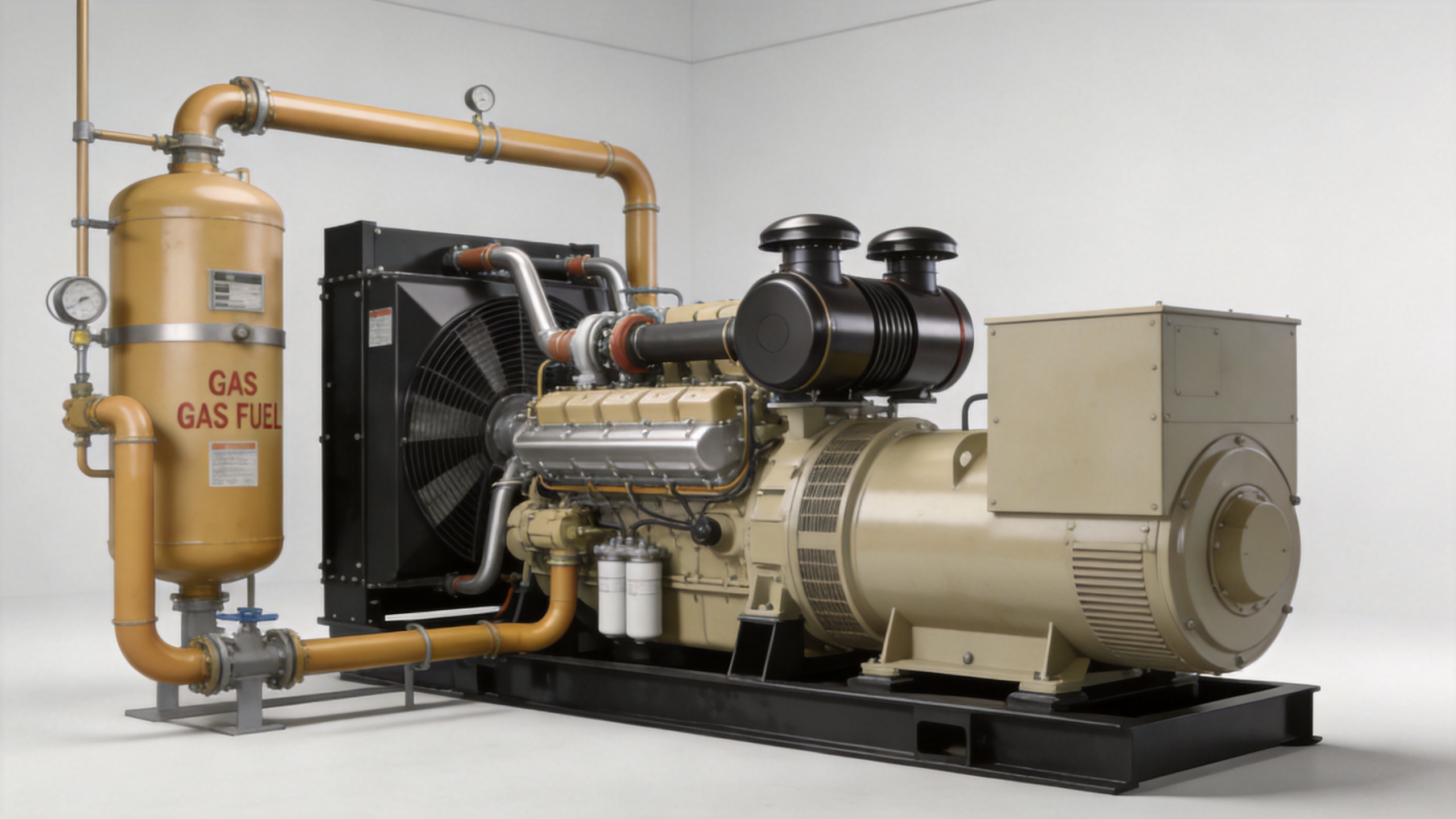
A dual fuel gas generator is designed around fuel flexibility. Depending on the engine and fuel-system configuration, it may use a primary gaseous fuel with a secondary fuel contribution or be engineered to transition when one approved fuel source is unavailable. The exact operating logic, load capability, emissions behavior, and run time are equipment-specific. Buyers should therefore ask for an engineered operating description instead of assuming that every system changes fuels in the same way.
In practical terms, the additional fuel path can reduce dependence on one supply assumption. It also forces a more useful conversation: what happens at start-up, what happens if gas pressure falls, how much secondary fuel is actually stored, and which loads must stay online?
Four Industrial Reasons to Consider Fuel Flexibility
1. Your outage scenario is longer than your normal fuel plan
Short interruptions and multi-day outages create different risks. A site supplied by pipeline gas may have a favorable routine operating profile, while an on-site fuel reserve can support contingency planning if the primary supply is constrained. A gas generator with a documented secondary-fuel strategy gives the team a way to compare fuel autonomy against the site’s required duration and critical-load plan.
2. Critical loads cannot all be treated equally
Industrial backup power is usually strongest when the load list is prioritized. Life-safety functions, control rooms, communications, pumps, security, and essential production steps may need power first; less critical equipment may be shed. This approach can reduce the generator size required for the first stage of an outage and extend available fuel. A dual fuel gas generator becomes more valuable when its fuel strategy is aligned with that load-shedding sequence rather than sized around every connected load.
3. Fuel logistics are a real operating burden
Stored liquid fuel requires delivery planning, periodic inspection, quality management, and safe storage practices. Gaseous fuel can reduce some daily handling, but it introduces its own requirements for pressure, pipe sizing, shutoff arrangements, and supply reliability. The right gas generator decision weighs those responsibilities honestly. Fuel flexibility can be useful when no single supply method fits both normal operation and emergency resilience.
4. The site needs a transition path toward cleaner energy systems
Many industrial operators are evaluating generation, energy storage, solar, wind, and demand-management together. Jiangsu Keya New Energy works across natural gas, biogas, hydrogen, methanol, LPG, solar, wind, and energy-storage application directions. For a project team, that broader view can help frame the generator as one part of a resilient power architecture rather than an isolated machine. The final mix must still be based on the local fuel availability, duty cycle, authority requirements, and project engineering.
Questions to Ask Before Selecting a Gas Generator
- What is the actual critical load? Record running load, starting currents, step-load behavior, and which loads can be shed.
- Which fuels are approved and reliably available? Verify supply pressure, fuel composition limits, delivery terms, and any curtailment provisions with the relevant provider.
- How does the system behave during a fuel event? Request the sequence for start-up, fuel monitoring, alarms, derating, transition, shutdown, and restart.
- How long can the secondary fuel support the selected load? Use the proposed engine’s documented consumption figures and include a realistic reserve margin.
- What transfer and control equipment is required? Automatic transfer switches, paralleling controls, load management, and remote monitoring should match the operating plan.
- What will the maintenance team test? A backup system must be exercised under a meaningful load and with procedures that validate both fuel paths where permitted.
Do Not Compare Systems by Nameplate Rating Alone
It is tempting to compare a gas generator only by kW rating and purchase price. That can overlook the conditions that determine whether it performs in an actual outage. Evaluate ambient temperature, altitude, gas pressure range, transient load acceptance, harmonics, motor starting, sound limits, emissions obligations, enclosure location, and service access. For dual-fuel equipment, add the secondary fuel’s storage, supply hardware, detection, and changeover controls to the review.
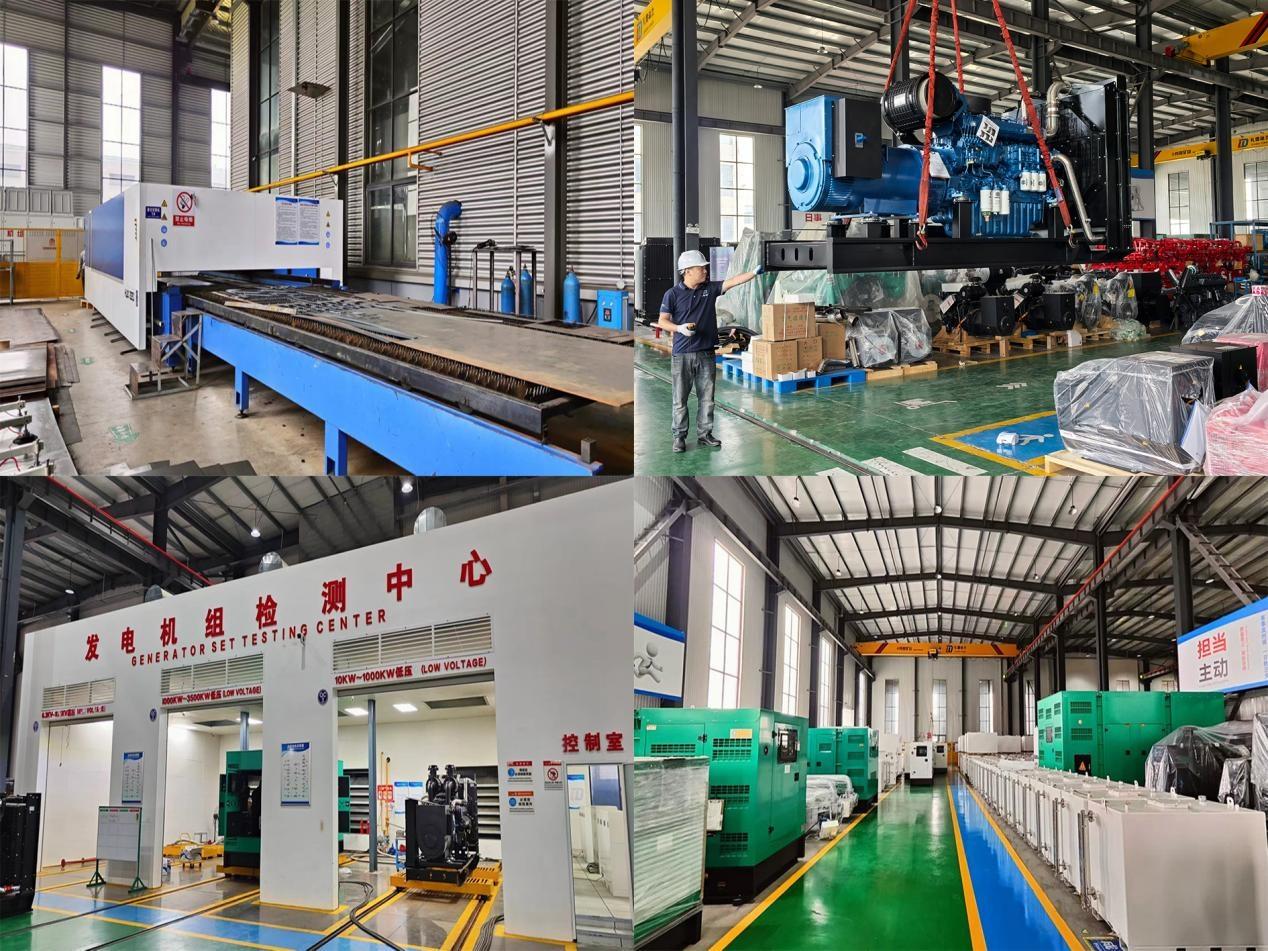
A useful commercial proposal should clearly separate confirmed equipment data from assumptions that must be verified at site. It should also identify who is responsible for fuel infrastructure, permitting, commissioning, operator training, and after-sales support. A supplier that can coordinate R&D, design, production, installation, and service discussions can help reduce handoff gaps, but the final design should be validated by qualified engineers and local authorities.
A Practical Decision Framework
- Define the outage cases: brief grid loss, extended utility interruption, fuel-supply restriction, and planned maintenance.
- Classify loads by criticality and establish a staged restoration sequence.
- Compare a single-fuel gas generator, a dual fuel gas generator, and other appropriate backup configurations against the same duty profile.
- Document fuel assumptions, including pressure, storage, replenishment, and expected availability under emergency conditions.
- Review compliance, installation constraints, emissions, noise, safety systems, and test procedures before placing the order.
- Commission the system using the real load plan, then keep records from regular inspections and exercises.
When Dual Fuel Is Not the Simplest Answer
Fuel flexibility adds equipment, controls, operating procedures, and potentially higher initial complexity. A small site with a predictable short-duration requirement and one well-proven fuel supply may be better served by a simpler solution. Conversely, a high-consequence site may need more than one generator, redundant distribution paths, energy storage, or a microgrid design. The point is to match the architecture to the consequence of failure, not to choose a dual fuel gas generator merely because it sounds more resilient.
Conclusion
A gas generator can be an effective industrial backup-power asset when the fuel supply, load profile, controls, and maintenance plan have been engineered as one system. A dual fuel gas generator is worth considering when the site needs a defined secondary fuel path and greater operational flexibility during uncertain conditions. Start with critical loads and credible outage scenarios, verify the real fuel assumptions, and then select equipment that the operating team can test and maintain with confidence.
 Hot News