

What Are the Environmental Impacts of Landfill Energy Generation?
Landfill energy generation can turn a difficult waste-stream byproduct into useful electricity or heat, but its environmental value depends on the whole system—not simply on whether a generator is running. A landfill gas generator can reduce the release of methane that would otherwise escape from a landfill. At the same time, collection losses, gas-treatment needs, combustion emissions, and long-term landfill management all affect the final result.
For project teams assessing landfill energy generation, the practical question is therefore not “Is landfill gas renewable?” in isolation. It is: how much gas is captured, how reliably is it controlled, what emissions occur at the engine or flare, and what energy source does the output displace? Looking at those conditions together produces a more useful environmental assessment.
Why Capturing Landfill Gas Matters
Organic material decomposes in an oxygen-poor landfill and produces landfill gas. The U.S. Environmental Protection Agency describes landfill gas as roughly 50% methane and 50% carbon dioxide, plus small amounts of non-methane organic compounds. Methane is especially important in the climate calculation: EPA notes that it is at least 28 times more effective than carbon dioxide at trapping heat over a 100-year period.
That is where a landfill gas generator can make its clearest environmental contribution. If a collection system captures methane that would have leaked to the atmosphere, routing the gas to controlled combustion can greatly reduce the climate impact of that fraction of gas. Turning part of the captured gas into electricity can also offset some grid electricity or on-site fuel use. Still, avoided methane is not the same as a claim that every unit of generated power is emissions-free.
The Main Environmental Benefits
1. Lower fugitive methane releases
A well-designed gas-well, piping, and vacuum system draws landfill gas toward a controlled destination rather than allowing it to migrate through the cover or vents. In many projects, this is the largest environmental benefit. The benefit is tied to collection performance, however. Gas that bypasses the wells, leaks through damaged piping, or escapes during maintenance remains a climate concern.
2. Useful energy from a gas that requires control anyway
Many landfills need gas-control systems for odor, safety, and emissions management even where energy recovery is not viable. When gas quality and flow are suitable, a landfill gas generator can produce electricity, provide combined heat and power, or support another approved energy-use pathway. Compared with flaring alone, energy recovery may obtain additional utility from gas that has already been collected—provided the generator operates reliably and does not increase uncontrolled releases.
3. Potential reduction in conventional energy demand
The displacement benefit depends on what the project’s output replaces. Electricity that avoids marginal fossil-fuel generation can have a different lifecycle effect from electricity supplied to a lower-carbon grid. This is why project reporting should state the grid, load profile, and accounting method rather than apply a single carbon result to every site.
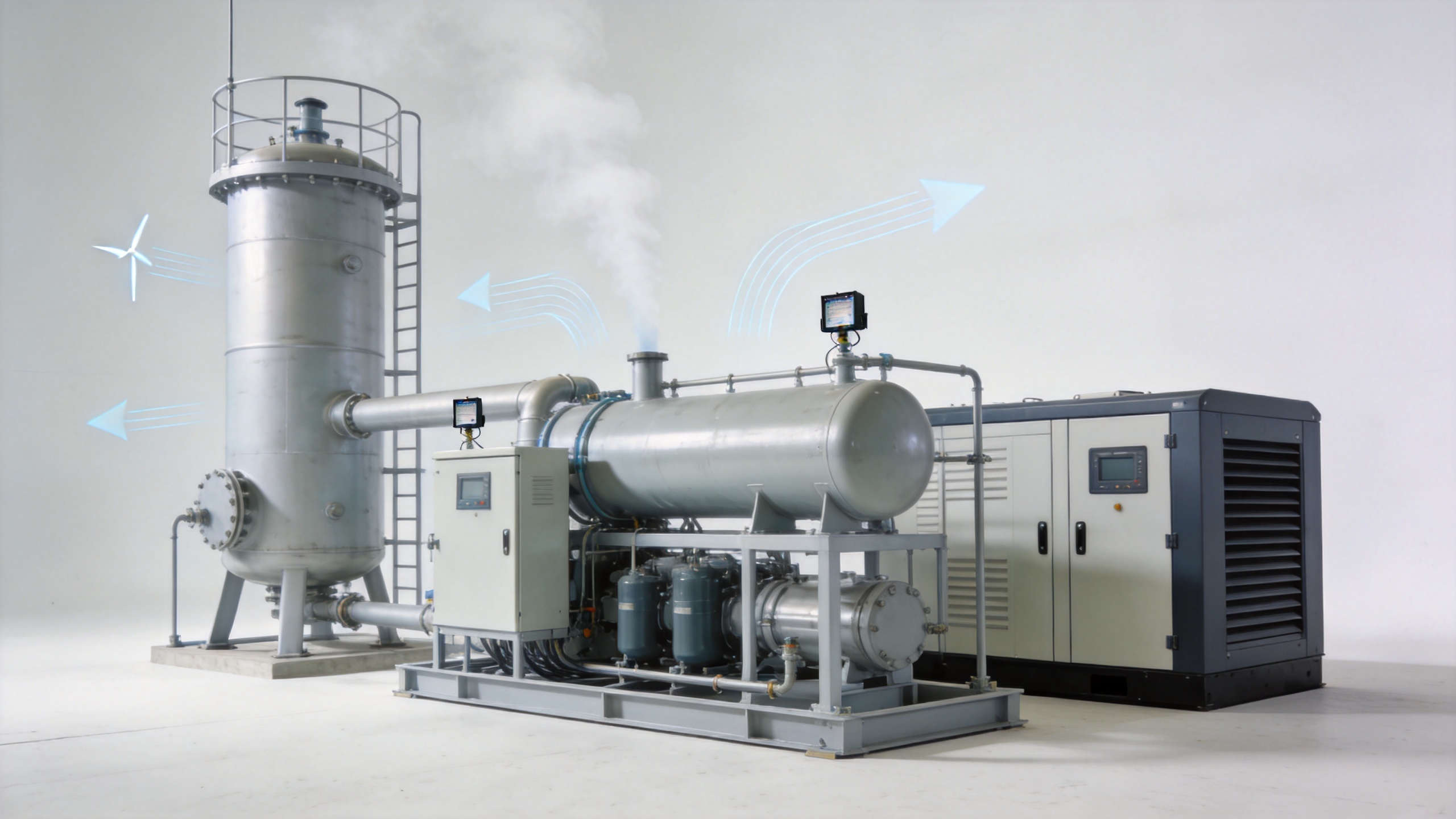
Environmental Trade-Offs That Need Equal Attention
Combustion is controlled, not impact-free
Using landfill gas in an engine converts methane largely to carbon dioxide, but combustion can also emit nitrogen oxides, carbon monoxide, and residual hydrocarbons. Nitrogen oxides matter because they contribute to ozone formation. Actual emissions vary with gas composition, engine design, load, maintenance condition, and installed controls. Permitting limits and local air-quality conditions should guide the technology and monitoring plan.
Methane slip and incomplete capture can erode the climate case
It is tempting to assess a landfill gas generator only at the stack. That misses two important loss points: methane that the collection system fails to capture and methane that passes through equipment unburned during starts, low-load periods, shutdowns, or poor combustion. Gas quality can also change as a landfill ages. Regular tuning, leak detection, wellfield balancing, and measured destruction efficiency are more meaningful than a one-time estimate.
Gas cleaning creates its own management tasks
Landfill gas may contain moisture, siloxanes, sulfur compounds, and trace contaminants. Removing these protects equipment and can improve operating stability, but filters, media, condensate, and spent treatment materials need proper handling. A project should include these material flows in its environmental management plan rather than treating gas conditioning as invisible.
Energy recovery does not eliminate the landfill’s wider impacts
Power generation does not resolve leachate, truck traffic, land use, waste prevention, or the long-term emissions that can continue after an energy project ends. It can be a useful mitigation measure within landfill operations, but it is not a substitute for reducing biodegradable waste entering landfills or for maintaining the cap and gas system after generation is no longer economical.
How to Evaluate Landfill Energy Generation on a Lifecycle Basis
A credible assessment starts with a baseline: what would happen to the gas without the project? In some cases, the realistic alternative is uncontrolled release; in others, it is collection and flaring. The incremental benefit of electricity generation is different in each case. Next, quantify the actual operating boundary rather than assuming a nameplate rating represents annual performance.
- Measure gas capture: track wellfield extraction, methane concentration, pressure, oxygen intrusion, and surface-emission survey results.
- Track conversion performance: record runtime, load factor, downtime, fuel flow, electricity or useful heat delivered, and combustion-control performance.
- Account for losses: document planned and unplanned venting, startup and shutdown events, leaks, flare use, and generator methane slip where measurement is available.
- Check local impacts: verify permit compliance for NOx, carbon monoxide, volatile organic compounds, noise, and odor; investigate complaints rather than relying only on annual summaries.
- Plan for changing gas: evaluate how declining flow and varying contaminant levels affect equipment life, controls, and the transition after energy recovery ends.
What a Responsible Project Team Should Ask Before Selecting Equipment
As a sustainability decision, a landfill gas generator should be specified around site conditions, not just electrical output. First confirm the gas-flow range, methane concentration, contaminant profile, and expected decline curve. Then define the collection and flare arrangement, interconnection limits, emissions-control obligations, and who owns monitoring data. These details determine whether the system can maintain climate benefits over time.
In practice, clear responsibility matters: the landfill operator, gas-system specialist, generator supplier, and environmental compliance team each influence the result. A generator can be well maintained while the wellfield is poorly balanced; conversely, a strong collection system can lose value if the engine has extended downtime without a reliable flare backup. The environmental outcome is a system outcome.
Bottom Line
Landfill energy generation can offer a meaningful climate benefit when it captures methane that would otherwise escape and converts it in a well-controlled system. A landfill gas generator can add useful power or heat to that control strategy, but it should not be described as impact-free. The strongest projects measure capture and destruction performance, control local air pollutants, manage treatment residues, and report the avoided-emissions assumptions clearly.
For buyers and operators, the most reliable next step is a site-specific assessment that combines gas data, equipment operating data, permitting requirements, and a lifecycle baseline. That approach keeps the focus where it belongs: reducing real emissions, not just producing a renewable-energy label.





 Hot News
